

Factories now demand welding systems that deliver repeatability, zûbûnî, and process stability.
Ji ber vê yekê, robotic laser welding has become a core solution for automated production lines.
By combining robotic motion with controlled laser energy, manufacturers gain predictable results.
Di encamê da, output quality improves while operator workload continues to decline.
Robot Laser Welding Performance in Automated Manufacturing
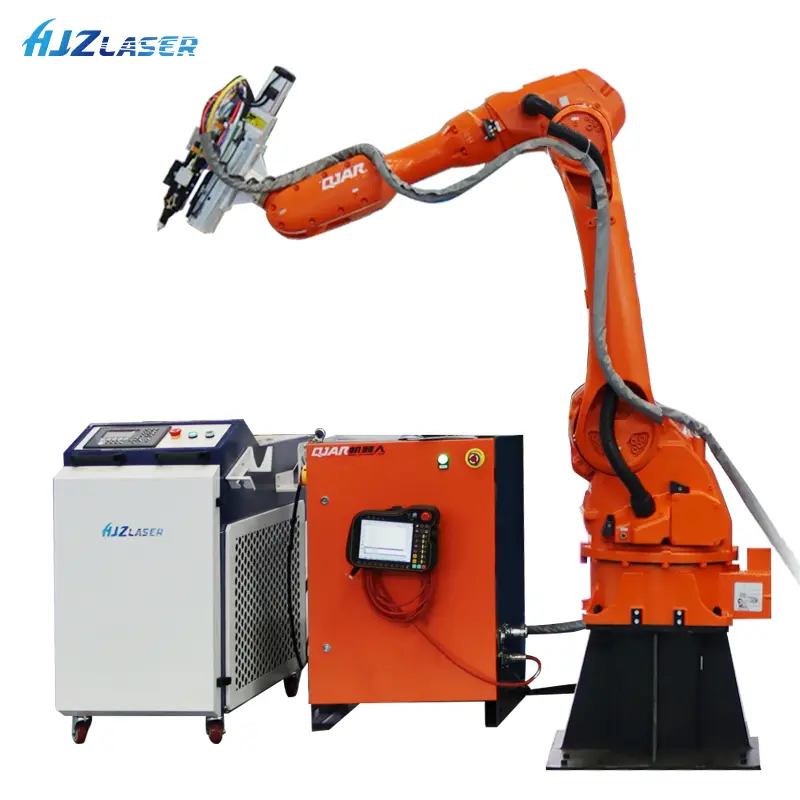
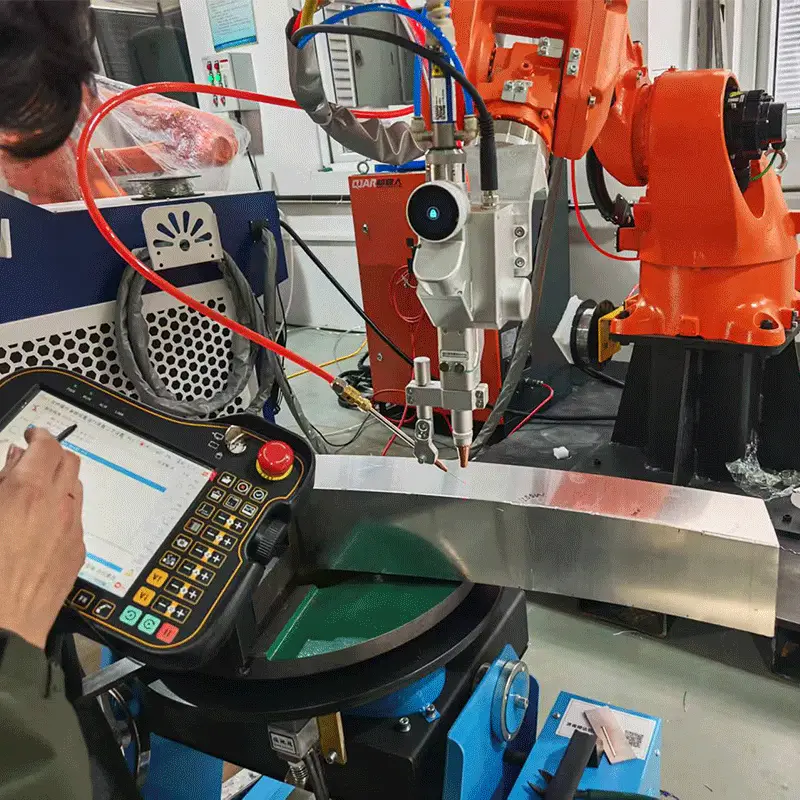
YEK robotic laser welding setup integrates multi-axis robotic arms with a high-density laser beam.
Di encamê de, it maintains consistent weld penetration on flat, curved, or irregular components.
Unlike manual welding, robots follow programmed paths precisely.
Ji ber vê yekê, cycle times shorten while weld uniformity remains stable across large production volumes.
Application Advantages Compared with Handheld Welding Systems
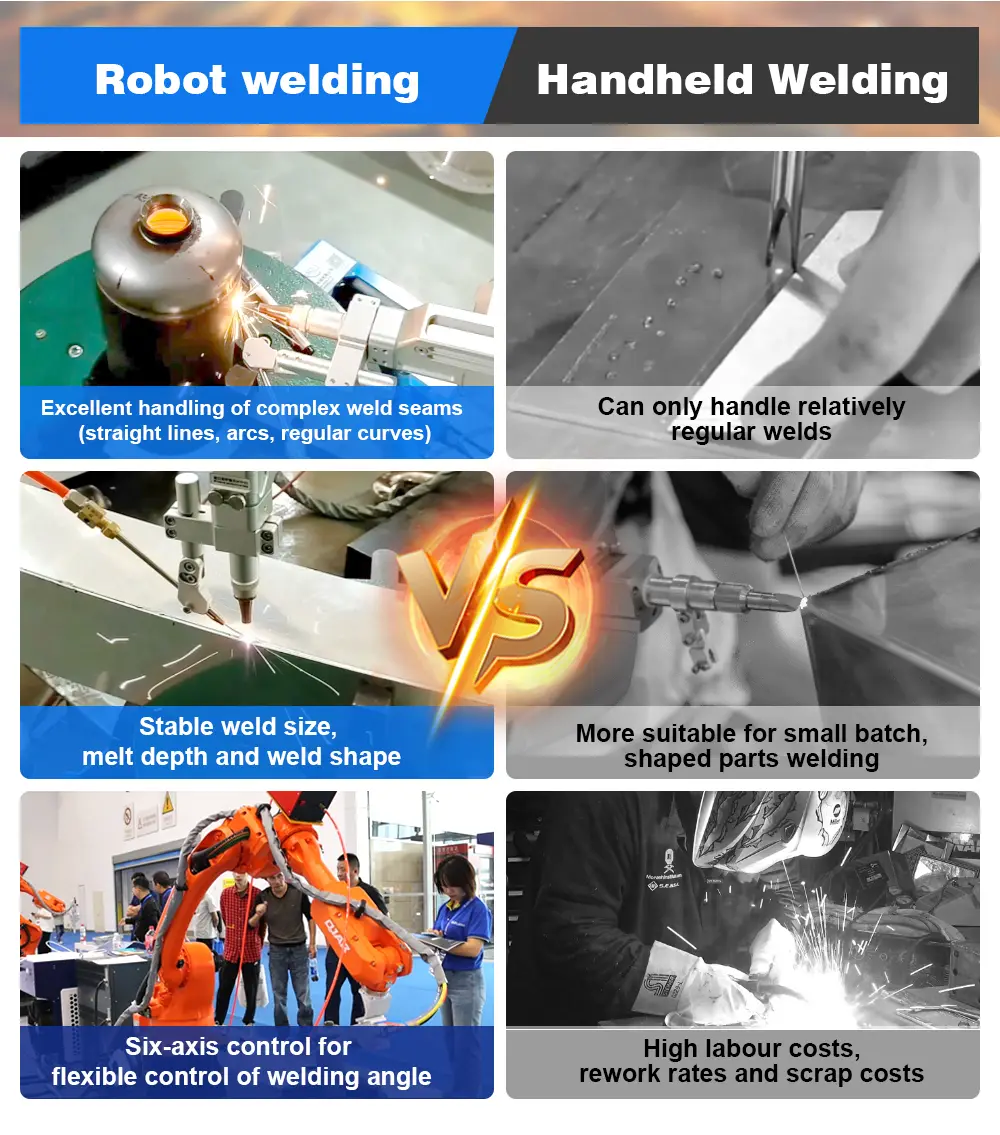
Robot welding systems outperform handheld solutions in precision-driven environments.
Ji bilî, automation removes human variability from critical welding processes.
• Accuracy and repeatability control
Robots position the laser head within micron-level tolerances.
Ji ber vê yekê, robotic laser welding achieves uniform seams impossible with handheld tools.
• Speed and continuous operation
Robotic systems operate without fatigue or skill fluctuation.
Di encamê da, throughput exceeds manual welding by a significant margin.
• Automation and process integration
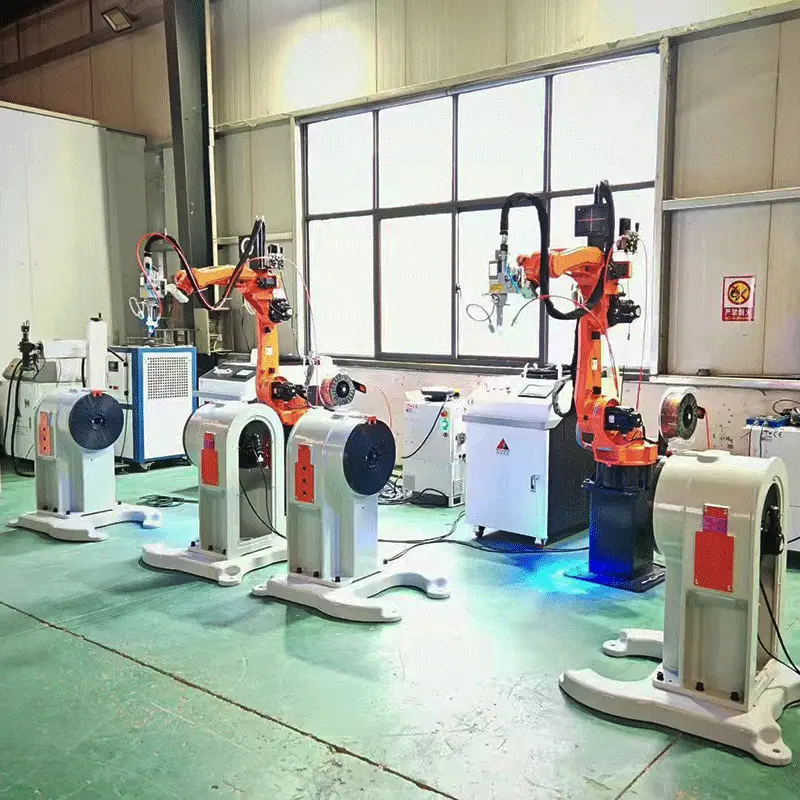
Robots connect directly with conveyors, fixtures, and vision systems.
Ji ber vê yekê, ew laser welding robot system supports fully automated production cells.
| Welding Method | Precision Stability | Labor Dependence |
|---|---|---|
| Robotic Laser Welding | Very High | Nizm |
| Handheld Welding | Variable | Bilind |


Industry Adoption and Long-Term Development Outlook
Demand for robotic welding continues to grow across advanced manufacturing sectors.
Ji ber vê yekê, robotic laser welding is becoming a standard for scalable production.
• Expanding industrial applications
Automotive bodies, battery trays, and aerospace parts rely on robotic accuracy.
Di vê navberê de, electronics and sheet-metal lines benefit from repeatable heat input.
• Smart manufacturing alignment
Robotic welding integrates easily with MES and digital monitoring systems.
Di encamê da, ew laser welding robot system supports data-driven quality control.
• Workforce transformation
Automation reduces dependence on highly skilled manual welders.
Ji ber vê yekê, factories maintain productivity despite labor shortages.
| Industry | Typical Components | Value Gained |
|---|---|---|
| Automotive | Frames, battery housings | Zûbûnî, consistency |
| Aerospace | Structural parts | Precision control |
| Electronics | Thin enclosures | Minimal distortion |

What Is Robotic Welding
What is robotic welding refers to using programmable robots to perform welding tasks automatically.
It combines motion control, laser energy delivery, and real-time path execution.
Unlike manual welding, robotic welding follows predefined trajectories repeatedly.
Ji ber vê yekê, it ensures consistent weld quality across thousands of identical parts.
Robotic Welding as a Scalable Manufacturing Investment
Robotic laser systems deliver long-term value through speed, tamî, and automation.
Di dawiyê de, they help factories remain competitive in high-volume production environments.
HJZLaser has over 15 years of experience in laser equipment design and manufacturing.
Wek kargehek çavkanî, HJZLaser offers competitive pricing and high cost-performance solutions.
Ew Robot Laser Welding Machine offers firms a practical way to increase precision and speed while keeping workflow stable. Bi kontrola pêşketî, hilberîna xurt, û vebijarkên maqûl, ew piştgirî dide karsaziyên ku ji bo hilberîna bilind û kalîteya weldingê pêbawer armanc dikin.


Reviews
Hîn nirxandin tune.