

Factories now demand welding systems that deliver repeatability, veloċità, and process stability.
Għalhekk, robotic laser welding has become a core solution for automated production lines.
By combining robotic motion with controlled laser energy, manufacturers gain predictable results.
Bħala riżultat, output quality improves while operator workload continues to decline.
Robot Laser Welding Performance in Automated Manufacturing
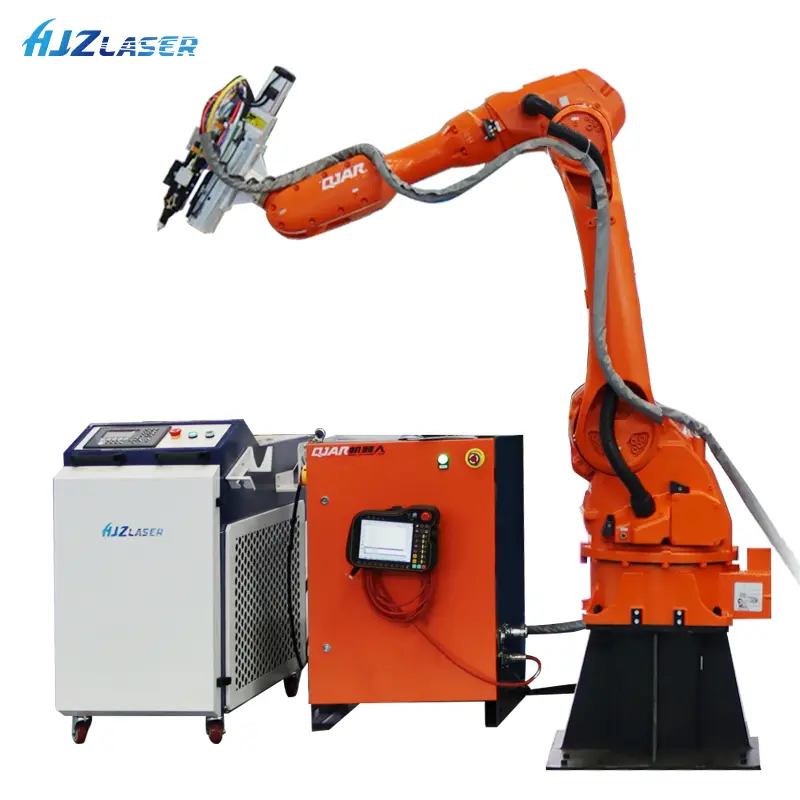
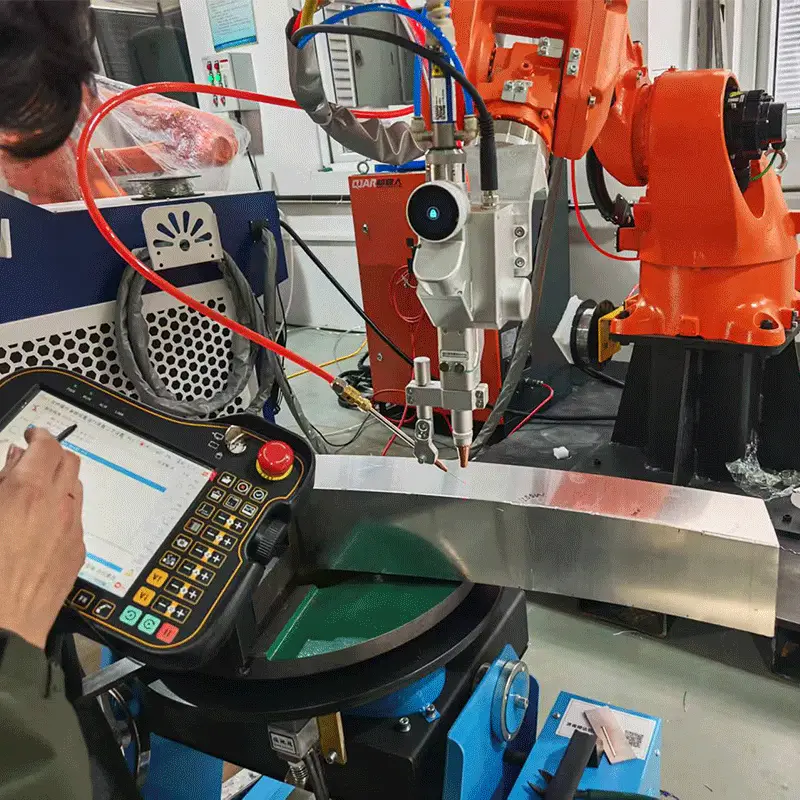
A robotic laser welding setup integrates multi-axis robotic arms with a high-density laser beam.
Konsegwentement, it maintains consistent weld penetration on flat, curved, or irregular components.
Unlike manual welding, robots follow programmed paths precisely.
Għalhekk, cycle times shorten while weld uniformity remains stable across large production volumes.
Application Advantages Compared with Handheld Welding Systems
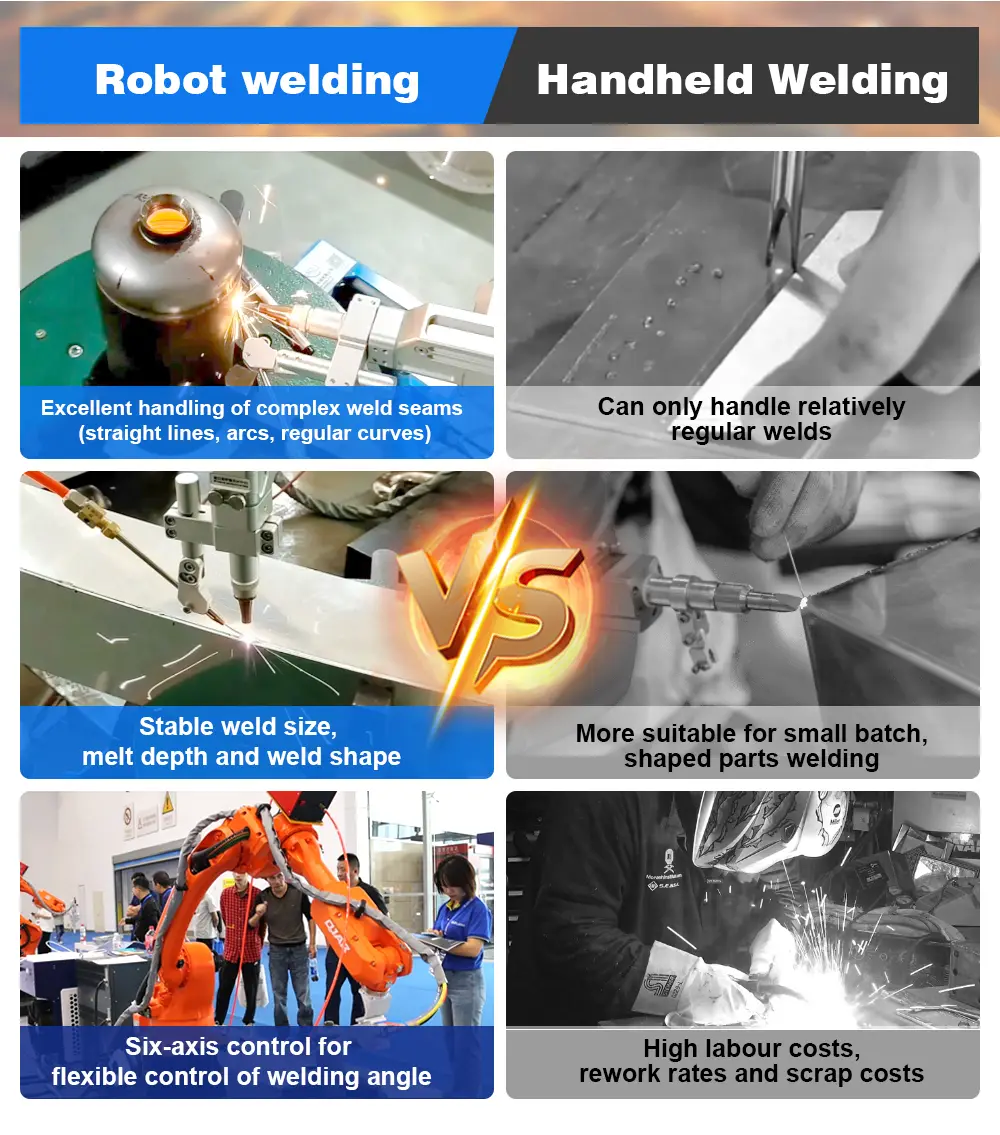
Robot welding systems outperform handheld solutions in precision-driven environments.
Barra minn hekk, automation removes human variability from critical welding processes.
• Accuracy and repeatability control
Robots position the laser head within micron-level tolerances.
Għalhekk, robotic laser welding achieves uniform seams impossible with handheld tools.
• Speed and continuous operation
Robotic systems operate without fatigue or skill fluctuation.
Bħala riżultat, throughput exceeds manual welding by a significant margin.
• Automation and process integration
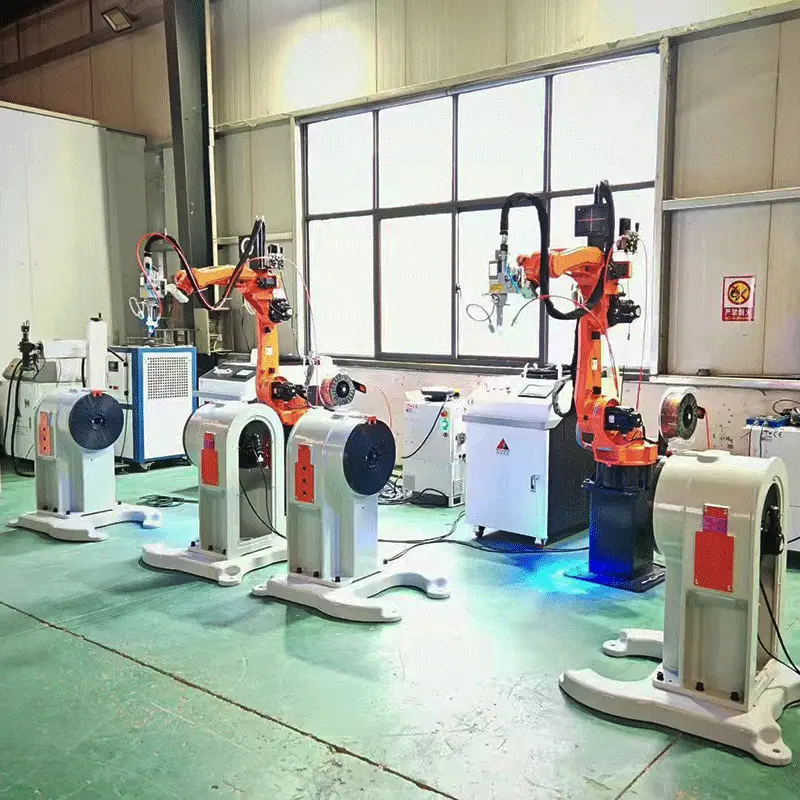
Robots connect directly with conveyors, fixtures, and vision systems.
Għalhekk, il laser welding robot system supports fully automated production cells.
| Welding Method | Precision Stability | Labor Dependence |
|---|---|---|
| Robotic Laser Welding | Very High | Baxx |
| Handheld Welding | Variable | Għoli |


Industry Adoption and Long-Term Development Outlook
Demand for robotic welding continues to grow across advanced manufacturing sectors.
Għalhekk, robotic laser welding is becoming a standard for scalable production.
• Expanding industrial applications
Automotive bodies, battery trays, and aerospace parts rely on robotic accuracy.
Sadanittant, electronics and sheet-metal lines benefit from repeatable heat input.
• Smart manufacturing alignment
Robotic welding integrates easily with MES and digital monitoring systems.
Bħala riżultat, il laser welding robot system supports data-driven quality control.
• Workforce transformation
Automation reduces dependence on highly skilled manual welders.
Għalhekk, factories maintain productivity despite labor shortages.
| Industry | Typical Components | Value Gained |
|---|---|---|
| Automotive | Frames, battery housings | Veloċità, consistency |
| Aerospazjali | Structural parts | Precision control |
| Electronics | Thin enclosures | Minimal distortion |

What Is Robotic Welding
What is robotic welding refers to using programmable robots to perform welding tasks automatically.
It combines motion control, laser energy delivery, and real-time path execution.
Unlike manual welding, robotic welding follows predefined trajectories repeatedly.
Għalhekk, it ensures consistent weld quality across thousands of identical parts.
Robotic Welding as a Scalable Manufacturing Investment
Robotic laser systems deliver long-term value through speed, preċiżjoni, and automation.
Fl-aħħar mill-aħħar, they help factories remain competitive in high-volume production environments.
HJZLaser has over 15 years of experience in laser equipment design and manufacturing.
Bħala fabbrika sors, HJZLaser offers competitive pricing and high cost-performance solutions.
Il- Robot Magni tal-Iwweldjar bil-Lejżer offers firms a practical way to increase precision and speed while keeping workflow stable. B'kontroll avvanzat, produzzjoni qawwija, u għażliet flessibbli, tappoġġja negozji li jimmiraw għal produttività ogħla u kwalità affidabbli tal-iwweldjar.


Reviżjonijiet
S'issa m'hemmx reviżjonijiet.